
 Español
 Português

Five Women Who Shaped the History of Tierra del Fuego
Categorías: Fuegian History
Five women who left a mark on Tierra del Fuego
The history of Tierra del Fuego was shaped by women who were born in this region or chose to live here. Through their work, resilience, cultural leadership and dedication, they became sources of inspiration to future generations. This article introduces five of their stories, as told in the original Turismo en Ushuaia publication.
Fuegia Basket: a Yaghan woman taken to England
At the beginning of the 19th century, Robert FitzRoy, captain of HMS Beagle, took four Yaghan people from Tierra del Fuego to England. Among them was a girl who became known as Fuegia Basket, a name linked in the original account to the baskets used by her community.
The stated intention of the expedition was to teach them English and European customs, then return them to Tierra del Fuego as interpreters. Their removal was not a voluntary cultural exchange: it took place in the context of colonial exploration and captivity.
During her time in England, Fuegia was studied and met prominent figures in science and society. She later returned to Tierra del Fuego aboard the Beagle on the voyage that also carried the young Charles Darwin. The account describes how she gradually resumed life with her own people after her return.

Mariners lost track of her for many years. Later historical recollections place her near the Anglican mission on the Ushuaia peninsula, where missionary Thomas Bridges reportedly found that she still remembered some English words.
Cristina Calderón: guardian of Yaghan language and traditions
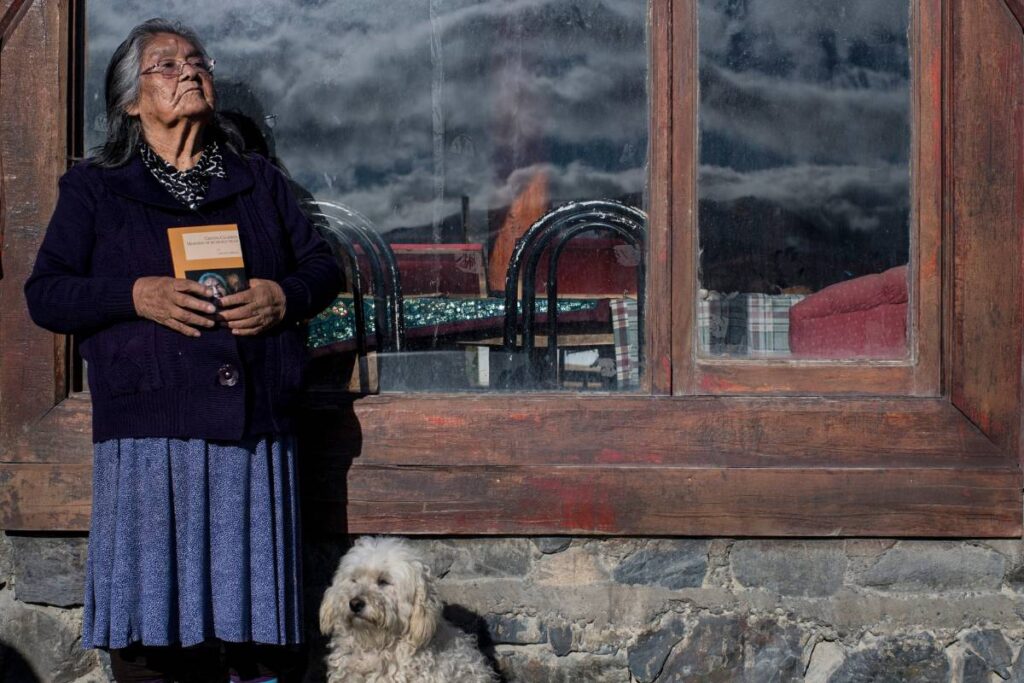
Cristina Calderón, born in 1928 at Puerto Róbalo on Navarino Island, Chile, became a prominent matriarch and cultural representative of the Yaghan people. She lived much of her life around Puerto Williams and worked with her relatives to keep Yaghan language, oral traditions, tales and craft practices alive.
Her knowledge included traditional basketry and the making of small canoe models. She received recognition as an Illustrious Daughter of the Magallanes and Chilean Antarctic region and was designated a living human treasure in recognition of her cultural contribution.

Cristina died in Punta Arenas in February 2022 at the age of 93, as described in the source. Her legacy remains central to discussions of the endangered Yaghan language and cultural heritage.
María de los Ángeles Sánchez de Caballero: an early school leader
Born in Buenos Aires in 1876, María de los Ángeles Sánchez de Caballero moved to Ushuaia when her partner, Ramón Lucio Cortés, was appointed to a senior police role in Tierra del Fuego.
She worked as a teacher at the National School No. 1, Domingo Faustino Sarmiento, and became its head in 1896. Ushuaia was then a small town of around two hundred inhabitants; its school occupied a modest house and served approximately ten children, including Yaghan pupils.

She married Ramón in January 1898. Their family lived on Maipú Avenue, in a building later associated with the restaurant Volver. The couple had seven children, all born in Ushuaia.
Graciela Ramacciotti: defending forests and urban nature
Originally from Córdoba, Graciela Ramacciotti settled in Ushuaia in 1985. She worked as a tourist guide and educator at secondary and university levels.
Her passion for nature led her to establish local environmental organisations, including the Finisterre Association and Friends of the Mountain Club. She campaigned on issues such as the loss of native forest, water protection, informal urban development, architectural heritage and the pressures brought by rapid tourism growth.

The original article highlights her role in opposition to the Trillium timber project in 1996, which involved large areas of native lenga, ñire and guindo forest.
She wrote several publications, including Flores y Frutos Silvestres Australes – Una mirada por Tierra del Fuego. After her death, a pedestrian passage in the Bahía Encerrada Urban Nature Reserve was named in her honour in 2011.
Mariana Soneira: a veteran of the Malvinas War
In 1982, Mariana Soneira was a 19-year-old student at Argentina’s National Nautical School. She served in naval communications aboard the transport vessel ARA Bahía San Blas when the Malvinas conflict began.

According to the original account, she was told she was not obliged to remain on board because she had not yet graduated as an officer. She chose to stay and worked during the conflict as the ship transported military equipment through the South Atlantic under radio silence.
After the war, she completed her studies and served for eight years on merchant ships as a radio telegraph officer. She later settled in Ushuaia with her family and was recognised as a city ambassador at an anniversary event mentioned in the original article.
Discover the human history of Ushuaia
These stories cover Indigenous culture, education, environmental protection and maritime history. They remind visitors that the region’s identity is as complex and important as its scenery. Consider adding museums and local cultural attractions to your trip, alongside outdoor excursions.