
 Español
 Português

Architecture and Gastronomy in Ushuaia: Historic Places to Visit
Categorías: Where to eat in Ushuaia, Fuegian History, Gastronomy
Architecture and gastronomy: another way to discover Ushuaia
Ushuaia, capital of Tierra del Fuego, is often described as the End of the World. Its history includes Indigenous peoples, Anglican missions, maritime exploration and the growth of a town closely associated with the former prison. Beyond its landscape, architectural details reveal much about the city.
The Former Prison and Maritime Museum is an important example of historic construction. The prison was built to hold people sent far from Argentina’s large urban centres. The End of the World Train recalls the railway used to move prisoners to collect timber through the Pipo River valley, a route now experienced as a heritage attraction.

Ushuaia’s architectural character includes traditional wooden houses, buildings influenced by European settlers and more recent modern development. Several gastronomic businesses have occupied old houses, maintaining façades and interiors that reveal the city’s past.

Krund
Krund takes its name from Ernesto Krund, a German pioneer who arrived in Tierra del Fuego in the 1920s. The original article associates him with the opening of an early route to the north of the island. The bar’s owners preserved elements of the original house to maintain its architectural identity.
Presented as a friendly cultural meeting place with Antarctic themes, the venue connected food and drinks with the landscape of sea and mountain.


Cervantes Bistro Fueguino
This venue was established in a traditional house with English-inspired architecture. Its name and concept recall the wreck of the German ship Monte Cervantes, whose passengers were welcomed by the small community of Ushuaia after their ship ran aground.
The source article describes a menu celebrating local ingredients and hospitality, with the historic building forming part of the experience.


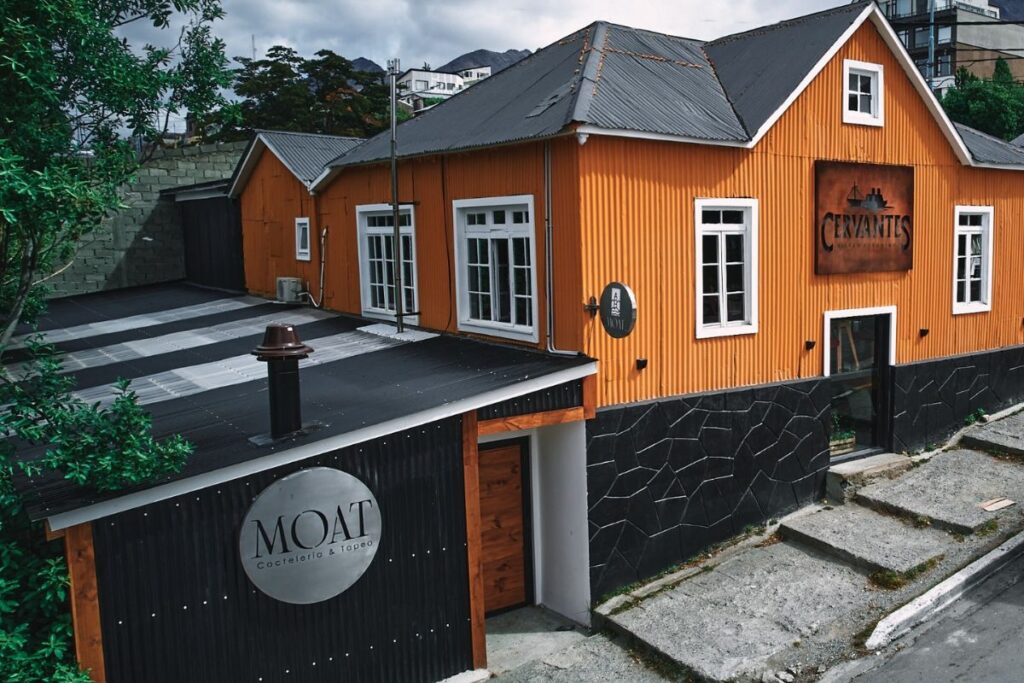
Moat
Moat is associated with cocktail drinks and small plates, taking its name from the remote access area to Peninsula Mitre. Its architecture, traditional decoration and distinctive menu are presented as a multisensory experience of southern Tierra del Fuego.

El Almacén de Ramos Generales
The original article traces this historic general store to the early twentieth century, when José Salomón settled in Ushuaia in 1913. Over time the establishment served not only as a supplier of goods but also as a meeting place for residents, sailors, people connected with the prison and travellers.

Preserved architectural details and objects help create the atmosphere of a living museum, reflecting stories of daily life in a remote southern settlement.

Casa Olmo
Casa Olmo occupies a traditional Fuegian house with a garden and architectural features associated with the city’s early period. The original guide states that the building was declared Cultural Heritage of Ushuaia in June 1999.
Its culinary concept included a varied menu of tapas, sandwiches, pizzas and everyday dishes, accompanied by drinks. Current opening and menu details require verification.

Volver
In a wooden house filled with nostalgic objects, Volver brings together food and memory. The original text describes fishing nets, old newspapers, typewriters, rugby shirts and other items forming a kind of gastronomic museum.

Its menu focuses on local ingredients. The guide associates chef Lino Adillón with both regional cuisine and conservation of southern marine biodiversity.
Bodegón Fueguino
The source describes a traditional Fuegian house dating to 1896, renovated inside while retaining its original façade and roofing details. The restaurant opened in 2002 and became associated with comforting, home-style food and a warm atmosphere.

Bar Ideal
Bar Ideal is one of the surviving older buildings on San Martín Street. Founded by Juan Buezas, it became a place for the community to gather. Its historic setting allows visitors to imagine the atmosphere of an earlier Ushuaia.

Architecture you can experience
This selection was originally published as a cultural and gastronomic route, so it does not confirm that each business is currently open. Confirm operating details before visiting. Alongside historic eateries, explore city museums and the End of the World Train to connect buildings with the stories of the people who lived here.