

 Español
 Português
What Was Life Like in Ushuaia’s End of the World Prison?
Categorías: What to do in Ushuaia
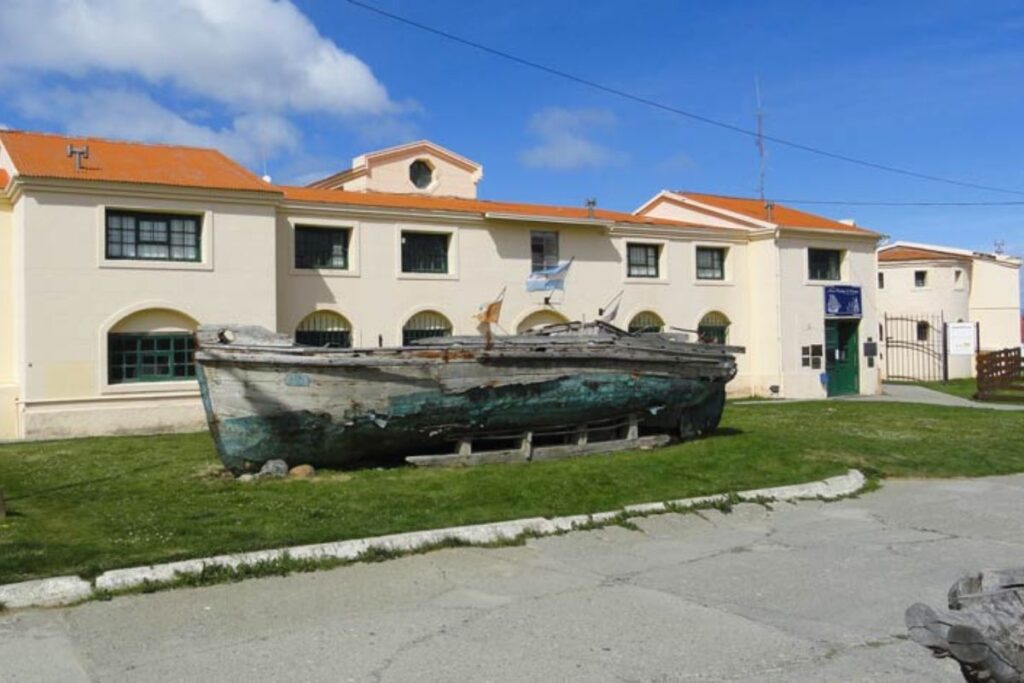
Visiting the former End of the World Prison in Ushuaia is much more than a typical museum experience: it means exploring one of Argentina’s harshest chapters of history. In this story, content creator Agustín González visits the former National Prison of Ushuaia, where punishment involved not just confinement, but also cold, isolation and an exhausting daily routine.
Located in Argentina’s southernmost city, the prison became known as the “Argentine Siberia”, a reference to its severe climate and the great distance that separated its inmates from the rest of the country.
Ushuaia’s National Prison: punishment at the edge of the map
The prison began operating in the early twentieth century and was designed to hold people convicted of serious crimes. Its location was no coincidence: Ushuaia was synonymous with extreme isolation.
Cells, cold and silence
The original account describes small stone cells, limited heating and persistent dampness. Silence inside the wings was broken by wind and the footsteps of guards or inmates.
Much of the building was constructed by prisoners themselves, who also worked in difficult conditions during the harsh Tierra del Fuego winters.
Notorious prisoners who lived behind these walls
The prison held people whose names became prominent in Argentine criminal and political history.
Cayetano Santos Godino, “El Petiso Orejudo”
One of the country’s most infamous serial murderers, Cayetano Santos Godino spent his final years imprisoned in Ushuaia. His story remains part of the museum’s darker historical narrative.
Simón Radowitzky
An anarchist and a notable figure in Argentina’s political history, Simón Radowitzky was sentenced for the bombing that killed police chief Ramón Falcón. His imprisonment became closely associated with the Ushuaia penitentiary.
Mateo Banks
Remembered for a series of murders in the Pampas, Mateo Banks was another well-known prisoner held in the southern penal institution.

Daily life: hard labour in extreme conditions
Life in the prison was governed by strict discipline and physically demanding tasks. Prisoners were required to cut timber in forests around Ushuaia, including during winter, to provide fuel for the penitentiary and the settlement.
The origins of the End of the World Train
A small railway carried wood from the Pipo River area towards the prison. Today, the End of the World Train recreates part of that historical story as one of Ushuaia’s best-known excursions.
From prison to museum
The penitentiary closed in 1947, during the presidency of Juan Domingo Perón. Over time, the building acquired historic status and was adapted for cultural use, becoming the site of several museums. The original account highlights its transformation into a museum complex by the late 1990s.
Preserving a difficult history
Today, the former prison houses displays about confinement, maritime exploration, Antarctica and the region’s history. It is one of Ushuaia’s most significant cultural visits for travellers who want to understand how the city developed and the lives of the people who shaped it.
You can combine the museum with other experiences and places to stay in Ushuaia while planning your trip.
Is Ushuaia’s former prison worth visiting?
Yes, especially if you are interested in historical places beyond the natural scenery. The exhibition can be emotionally intense: it deals with punishment, isolation and the conditions endured by inmates.
Recommended for
- Travellers interested in history and criminology
- Visitors looking for a different cultural experience
- Anyone hoping to understand a less familiar side of Ushuaia
Ushuaia: a place of contrasts
Behind the Beagle Channel, snow-covered mountains and famous excursions lies a history shaped by hardship, isolation and survival. Understanding the former prison adds depth to a visit to the End of the World.
Frequently asked questions about the End of the World Prison
Where is the prison?
The former National Prison is in Ushuaia, Tierra del Fuego, within the present-day Maritime and Prison Museum complex.
Can I visit it?
Yes. It operates as a museum open to visitors. Check its official visitor information for current opening hours and admission conditions.
How long does a visit take?
Allow approximately one to two hours, depending on your interests and the exhibitions you choose to explore.
Is it connected to the End of the World Train?
Yes. The tourist train commemorates the historical railway used to transport timber worked by prisoners.
Can children visit?
Children can visit with adults, but some exhibits deal with difficult historical topics and may be better suited to older children.